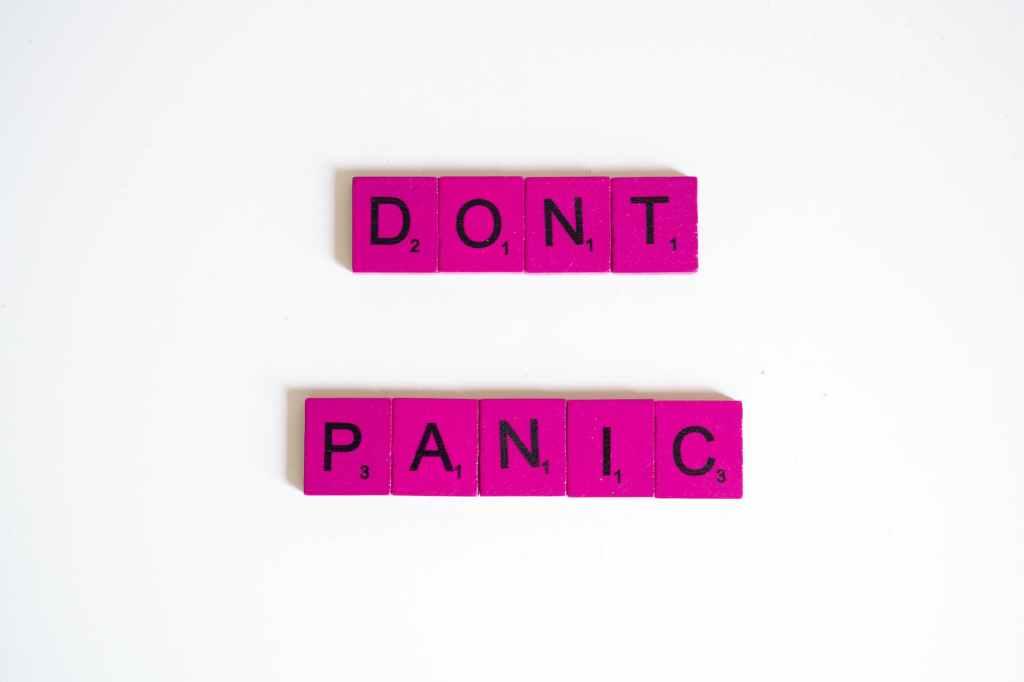
TYPES OF ANXIETY DISORDERS(PART TWO)


❎ PANIC DISORDERS
 
Panic disorders occur when you experience frequent, unexpected panic attacks.
 
Panic attacks are defined as sudden feelings of intense fear that trigger a severe physical reaction when there is no sign of danger.
 
Some people have panic attacks when they undergo a stressful event. This is normal as long as it does not happen often and there is also a known cause for the panic.
 
But it becomes a disorder when it happens recurrently.
 
Some major symptoms of panic attacks are:
 
• Rapid heart pounding 

• Nausea

• Abdominal cramping

• Chest pain

• Sweating

• Trembling

• Shortness of breath

• Dry mouth

The exact cause of panic disorder, like other mental health conditions, is unknown.
 
But some reasons have been linked to the causes of panic disorders. They include;
 
• Chemical imbalance in the brain.

• Having a family member with panic disorder.

• Traumatic life experiences.

 
Panic disorder is common in children, especially teenagers.
 
And according to research, it is known to be severe in children because it can slow down their learning process and also their development.
 
❎ POST TRAUMATIC STRESS DISORDERS
(PTSD)
 
It is also known as “shell shock.” It is a mental health condition that occurs when someone has experienced a traumatic event.
 
Such events could be sexual violence, domestic violence, or the loss of loved ones, etc.
 
A person with PTSD remembers such traumatic experiences as flashbacks or nightmares.
 
Some major symptoms can help diagnose PTSD. These symptoms include
 
• Avoidance: PTSD patients try to avoid any situation that can trigger the memory of the traumatic event.
 
Such people are plagued by negative thoughts and find it difficult to recall the entire traumatic event.

• Intrusive thoughts: they keep having flashbacks that look like the event is happening all over again.
 
• Change in arousal: such a person gets easily startled and scared. The person finds it hard to concentrate and sleep.
 
Seek help when you need it.
 
You are not alone.
 
Some people are ready to listen.
 
I am ready to listen.
 
I hope you find this content helpful.
 
Follow now.
 
Share this with people; someone will need this.
 
Yours truly,
 
Your favourite mental health advocate.

#mentalhealthawareness #mentalhealth #panicattacks #trauma #Triplec6

TYPES OF ANXIETY DISORDERS(PART ONE) 


There are mainly six types of anxiety disorders. They include;
 
A. Generalised Anxiety Disorders(GAD)

B. Obsessive-Compulsive Disorders
(OCD)
 
C. Panic Disorders

D. Post-traumatic Stress Disorders
(PTSD) 

E. Phobias

F. Medicated-induced anxiety disorders

 
❎ GENERALISED ANXIETY DISORDERS
 
It is abbreviated to GAD. A person is said to have GAD when they frequently worry excessively over different things.
 
Such a person excessively worries about wealth, health, work, and family.
 
To diagnose someone with GAD means the person has difficulty controlling worry almost every day, which means it has to last for over six months.
 
Such a person should be known to have three or more symptoms of anxiety.
 
Note that GAD has no known causes. But some factors play a huge role. Factors like biological factors, family background, and life experience.
 
❎ OBSESSIVE-COMPULSIVE DISORDERS
 
It is abbreviated to OCD. It is a mental condition that causes an urge to do things repeatedly in an unhealthy manner. This term is “compulsion.”
 
OCD can also be defined as a mental illness that causes repeated unwanted thoughts or sensations. This term is called “obsession.”
 
There is a difference between obsession and compulsion, but there are some people with OCD that have both.
 
Obsessions are major thoughts and examples of such thoughts are:
 
• Frequently observing your breathing,
 
• Frequently noticing how your heart beats
 
Compulsion is about doing something repeatedly in an unhealthy manner.
 
Some examples of these compulsive habits are:
 
• Needing to count and check things over and over again,
 
• Needing to arrange things in a certain manner repeatedly
 
• Fear of touching things that are dirty
 
• Cleaning aggressively over and over again.
 
People with OCD do not do these things because they enjoy them; they do these things because they can’t stop.
 
If they choose to stop, they feel sad or can be anxious.
 
As a human, it is okay to do things repeatedly. It becomes an obsession or compulsion when it is done in an unhealthy manner.
 
Take your mental health seriously.
 
Join me tomorrow to learn more about the types of anxiety disorders.
 
Follow now.
 
Share it with someone today. Someone can find it helpful.
 
Yours truly,
 
Your favourite mental health advocate.

#mentalhealth #mentalhealthawareness #anxietyawareness #TripleC6

CAUSES OF ANXIETY DISORDERS

CAUSES OF ANXIETY DISORDERS

There are lots of causes of anxiety disorders. The main point is that People with anxiety disorders have something that has occurred in their lives that has caused them to have such conditions.
 

❎ Environmental factors:

These problems are mostly things that occur around people. The way people are brought up impacts their mental health.
 
Examples of such factors are family problems, work problems, relationship issues, and difficulty at school.
 

❎ Genetics:

There are researches that  has shown that when a person who has an anxiety disorder is in a family, there is a chance that someone in their family might experience one.
 
❎ Medical Factors:

There are times when diseases or other health conditions can cause anxiety.
 
Anxiety comes as a symptom of a disease or as a side effect of drugs being taken for medication.
 
Some health conditions that can trigger anxiety are: brain tumours, hyperthyroidism, hypothyroidism, myasthenia gravis, Lyme disease, etc.
 
Asthma medications, thyroid medications, seizure medications, Parkinson’s medications, and other medications can all cause anxiety.
 
When you are taking medications, you should make sure that you are taking note of changes in your body.

❎ Brain Chemistry:

Psychologists define many anxiety disorders as the presence of defective hormones and electrical signals in the brain.
 
There are neurotransmitters in our brains that affect our bodies and mental functions.
 
Research has shown that when these neurotransmitters undergo misalignment, it affects mood and is also linked to anxiety disorders.
 
Examples of these neurotransmitters are serotonin, dopamine, norepinephrine, and gamma-aminobutyric acid (GABA) 
 

❎ Withdrawal from an illegal substance

Examples of such substances are alcohol, cocaine, methamphetamine, marijuana, etc.
 
Taking the drugs at the beginning seems good, and people who take them believe that they can stop.
 
They can’t live without it after taking it for so long.
 
And if these substances are stopped, the person begins to experience withdrawal symptoms in which various types of anxiety disorders are part of the symptoms they will experience.
 
For more insightful content, follow now.
 
Share this with people around you. Someone may need it.
 
Happy World Mental Health Day.
 
Take a step to improve your mental health.
 
Yours truly,
 
Your favourite mental health advocate

#mentalhealth #triplec6
 

COMMON SIGNS AND SYMPTOMS OF ANXIETY AND ANXIETY DISORDERS


It is normal to feel anxious. But it becomes a disorder when it happens often or for a long period.

There are types of anxiety disorders which have different diagnoses.

Examples of these disorders are generalised anxiety disorders, social phobias, specific phobias, etc.

All types of anxiety disorders will be explained.

But there are common signs that indicate that a person is anxious. These includes:

❎ Worrying excessively:

It is a feeling that something bad or dangerous is about to happen.

It is normal to have a feeling of fear when you are facing a problem.

But, it becomes a problem when you get anxious too often about the future you know nothing about.

❎ Breathing Rapidly:

It is also called hyperventilation. It can be so severe that the person can have trouble breathing and might need assistance.

❎ Having trouble sleeping:

It is normal to have trouble sleeping when someone is worried about something.

But persistent worry, which affects sleep often, is not normal.

❎ Experiencing gastrointestinal
disturbance:

The body releases hormones and chemicals.

These chemicals can enter the digestive tract and disrupt the gut flora( bacteria in our stomach), which can result in a chemical imbalance that leads to diarrhoea.

❎ Having trouble concentrating:

This occurs because the person only concentrates on the problem they are facing. The person does not take note of other important situations around them.

❎ Having an increased heart rate:

This can also be called palpitations. When a person is anxious, their flight or fight response kicks in, and it leads to an increased heart rate.

It is normal to have an increased heart rate when you are anxious about a situation.

But if it happens often or for a long period, it needs serious attention.

❎ Trembling:

The person’s muscles become tense resulting in the person shaking. This occurs when a person perceives a threat.

❎ Sweating.

❎ Fatigue.


Take positivity seriously in your life today.

Did you find this content useful?

Don’t hesitate to follow me for more.

Share this with people, someone might need this.

I remain your favourite mental health advocate.

#mentalhealthawareness #anxiety #anxietydisorders #triplec6

ANXIETY AND ANXIETY DISORDERS

A feeling of anxiety is a fear of the future. Anxiety is a normal human response.

When we are under stress, we either feel anxious or experience anxiety. Everyone becomes tense.

Everyone has experienced stress-inducing circumstances. Such as; Exams, public speaking, or anticipating a parent’s reprimand could have all been the cause.

Anxiety disorders are types of mental health disorders.

The World Health Organization (WHO) describes anxiety disorders as characterized by excessive fear and worry and related behavioural disorders.

When anxiety disorders are severe, they can interfere with routine daily activities.

As of 2019, 301 million people worldwide reported having anxiety.

And 58 million of the 301 million people who suffer from anxiety disorders are children and teenagers.

Although feeling anxious is common, it turns into a disorder when you worry excessively or when your anxiety prevents you from participating in activities that are going on around you.

I have experienced anxiety disorders since I was a young child.

But I suppose mine wasn’t as bad. From junior high school through my second year of college, I dealt with it. It was prior to COVID-19. weird, huh?

Every time I have an exam, my anxiety gets worse. When you have exams, it’s before you feel anxious, but mine got worse.

I get more anxious as soon as I walk into the exam room. I’ll start to get trembling in my hands. Not bad, you’d say?

Disorders of anxiety give you the impression that nothing you do is good enough.

It gives you the impression that you have brain fog and are unable to think clearly.

Take care of your mental health.

Have faith in your own abilities.

You are a fighter.

Till I come your way again.

Yours truly,

Your favourite mental health advocate.

ROLES OF PHARMACISTS IN MENTAL HEALTH CARE


A pharmacist is not only an expert in dispensing drugs but also an expert in knowing the symptoms of both physical and mental conditions.

Pharmacists are known to be the middlemen. They are the link between the patient and the hospital.

Most people prefer going to the nearest pharmacy to complain about a mild condition rather than going to the hospital.

When it comes to mental health, there is a lot of stigma. This is due to a lack of awareness by healthcare providers.

It is high time that pharmacists embrace their front-line role in breaking the mental health stigma.

For a pharmacist who runs a pharmacy in his or her community. You are responsible for the overall well-being of your community.

A lot of people need help. but are scared to talk because of the stigma.

I will share my opinion on what can be done to start erasing the stigma.

🔱Tips that Pharmacists can give to Patients daily

✅Advise patients to become physically active.

✅Patients should eat a balanced diet.

✅Drink alcohol in moderation or stop drinking alcohol.

✅Advise patients to always learn to not bottle up feelings and emotions.

✅Tell the patient to learn some new skills.

What about the whole community? How can you, as a pharmacist, give them the awareness that they need?

🔱Pharmacists’ Key Roles in Raising Mental Health Awareness

These roles are solely based on my research. They are solutions I can give to the eradication of stigma. The roles are:

✅Developing an outreach:

The stigma surrounding mental health is due to a lack of awareness. People do not know that mental health conditions have various types.

As a pharmacist, you can pick a month. You can use mental health awareness month to create awareness in your community.

In your outreach, educate people on what mental health and mental health conditions are.

Give them your official phone number to call you when they need help.

✅Creating an anonymous hotline:

Most people find it hard to talk to people about their mental health. They feel like people will see them as insane.

establishing a hotline where you can freely communicate with people in need of assistance

You do not need to know the person’s name. You just need to give the patient the support that they need.

You can link your patient to the nearest mental health care service around you.

It is your responsibility as a pharmacist to make sure an illness is cured when you deliver the right drugs and care.

STOP THE STIGMA!

CHANGE BEGINS WITH YOU!

Do you need personalised tips on how to improve your mental health?

Are you finding it hard to create that day-to-day journal?

Follow me now on my LINKEDIN account.

https://www.linkedin.com/in/mohammed-aishat-937b0b195

You can also contact me through my Email( maishat08@gmail.com)

TO MY WONDERFUL READERS SPEAK KINDLY TO SOMEONE TODAY.

HELP SOMEONE SMILE TODAY.

#TRIPLEC #mentalhealthawareness

TIPS ON HOW TO IMPROVE MENTAL HEALTH ( Part Three of Three)


✅ Good Sleeping Habits

There are times we deprive ourselves of sleep due to day activities and the completion of certain tasks like; exams, office work, games, and movies.

It is normal to want to have fun at night.

It is okay to want to finish that office work before you go to bed.

It is good to read well before exams.

But these activities should not be done regularly for a long period.

They not only deprive us of our sleep but also affect our health, both physically and mentally.

According to a Harvard University study, there is a link between sleep and mental health. How?

Well, when we deprive ourselves of sleep at night, our bodies produce a stress hormone called cortisol.

This cortisol helps to manage stress and helps the brain form memories.

And it is known that an increase in the cortisol level increases the risk of having depression, anxiety, or other mental disorders.

🔰The benefits of good sleep

🔱Weight control

🔱Lower blood pressure

🔱Increase energy

🔱 Reduces the risk of depression, anxiety, or other mental disorders.

🔰Tips on Creating a Good Sleep Pattern

🔱Sleep schedule:

Try to calculate the time of your work at school or in the office.

This will determine how much time you have left for other activities and sleep.

Make sure you calculate your time in such a way that you can get 7 hours of sleep.

🔱Do not go to bed hungry.

When you don’t eat before going to bed, there is a high chance of you waking up at night to eat.

This automatically disturbs your sleep. because you have woken up to eat.

Make sure you also eat something light at night before going to bed.

Eating too much can cause discomfort when you are about to sleep.

🔱 Have a warm bath

Always make sure to bathe at night.

According to a study, taking a warm bath one and a half hours before bed increases your chances of falling asleep rapidly.

It helps cool the body and helps make sleep easier.

🔱Drink warm milk.

Warm milk help improves sleep because it has a lot of nutrients like tryptophan, magnesium and melatonin.

Melatonin is the chemical substance that helps to induce sleep.

If you find it difficult to sleep at night, make sure to drink warm milk.

Do not become a sleeping pill addict.

Make Sure You Sleep at least 7 hours and not more than 9 hours a day.

🔱 Physical Activity

The more you are active during the day the more your body pushes you to sleep at night.

A good piece of advice I give is to exercise regularly. Even if it is 10 minutes each day.

BE RESPONSIBLE!

BE POSITIVE!

Did you learn something new today?

Check out my previous post for more tips.

For more insightful content follow now.

#mentalhealthawareness #triplec #positivity


TIPS ON HOW TO IMPROVE MENTAL HEALTH( Part Two of Three)

✅ DIET

Did you know that eating unhealthy foods can have an impact on your mental health?

You’re probably wondering how. There is, however, a link between your gastrointestinal tract (e.g., stomach) and your brain.

Millions of bacteria live in your gastrointestinal tract (GIT).

The influence of these microorganisms is determined by the food you eat. The outcome can be positive or negative.

The bacteria in your GIT influence the creation of chemical substances that transmits messages to your brain and aid in mood regulation.

Serotonin and dopamine are two examples of feel-good neurotransmitters or chemical substances.

The foods you eat, whether healthy or harmful, can have a significant impact on your mood.

These chemical substances will be produced normally if you eat healthy meals.

The majority of healthy meals are high in tryptophan, an amino acid used in the production of feel-good neurotransmitters.

Because good bacteria are the ones attempting to digest the food. This can lead to an improvement in one’s mood.

If you consume unhealthy foods, you are more likely to have a sudden but short boost in dopamine and a reduction in serotonin.

This will result in a major change in mood. This shift is manifested in mood swings.

In addition, eating unhealthy foods regularly might create permanent mood changes, which can lead to anxiety or depression.

🔰 Unhealthy Foods

It appears difficult to tell individuals to stop eating a certain sort of food.

Because some individuals consume only what they can afford.

But that shouldn’t stop them from eating well, should it?

Foods like these, on the other hand, should be consumed in moderation.

Among these foods are:

• Refined sugar,

•  Processed Meat,

• Refined grain,

• Caffeine,

• Dairy foods rich in fat,

🔰 Healthy Foods for Better Mental Health

🔱 Foods high in fibre:

When you eat fibre-rich meals, you tend to increase the feel-good compounds in your body.

These are serotonin and dopamine.

You feel energised when your levels of these substances are elevated or normal.

This sort of diet includes apples, lentils, avocados, beans, bananas, and whole grains such as oats, barley, vegetables, and nuts.

🔱 Foods high in antioxidants:

It also helps to raise our mood by increasing feel-good hormones in our brain.

Such foods include carrots, turmeric, potatoes, cabbage, beetroot, green tea, and dark chocolate.

🔱 Omega-3-rich foods

It also helps to boost our mood by increasing the feel-good hormones in our brain.

These foods have been linked to a slower progression of dementia.

And also aids in the reduction of depression symptoms

Salmon, tuna, mackerel, and grass-fed meats like goat, chicken, and turkey are examples of such foods.

Be cautious of what you put in your mouth

Did you discover anything new?

Check my posts for previous tips.

And Follow me for more tips.

#mentalhealthawareness #triplec #like #share

TIPS ON HOW TO IMPROVE MENTAL HEALTH  (Part One of Three)


✅ SOCIALISE

Connecting with people can help improve mental health by making us not think about stress or other disturbing things around us.

Being an introvert should not stop you from socialising.

🔱Ways to Socialise

~Spend time with family members:-

You can plan to have a picnic with your family members once in a while.

If you don’t live in the same state or country as your family members, you can do a video call probably every weekend or when you are free.

Technology has made things easy.

~Spend time with friends:-

You do not need a lot of friends to socialise. Having two or more friends can help you as well.

You can arrange a lunch date when you and your friends are free.

During this time, you and your friends can chat about things and laugh together.

You can also arrange a sleepover party.

All these kinds of activities can help you think less about a problem.

~Volunteer:-

When you lend a helping hand, you feel less stressed because you are thinking less and you are trying to provide help to those who need it.

You can volunteer for a non-profit organisation like an orphanage, or women’s and children’s empowerment.

You can also help out at your church, mosque, or any place of worship.

✅ Learn a new skill.

When you learn something new, you can see your confidence and your capability.

It can also help boost self-esteem.

You do not have to spend a whole day learning something new.

You can take it slow by learning a new skill you love for 30 minutes each day.

✅ RECORD YOUR SUCCESS

A small win is still a success.

When you record progress, it only gives you a positive mindset.

This record can also help to cheer you up during your bad days.

🔱 How to Record an Achievement

I. You should always write the date the success occurred.

II. The outfit you wore that day should be recorded. It gives a good visual remembrance.

III. You should give details on how you obtained your success.

IV. Be grateful.

V. Appreciate yourself.

This is just part one of the tips.

Do you have a book where you record your success?

If the answer is no. Get a book today and start recording your achievements.

Follow and join me again tomorrow to learn more tips to improve mental health.

You can also share with other people. Someone can find it useful.

HAPPY READING

#mentalhealth #success #mindset #grateful #like #share #triplec

MY RECIPE FOR HAPPINESS

Happiness is an emotional state characterized by feelings of joy, satisfaction, contentment, and fulfilment. 

While happiness has many different definitions, it is often described as involving positive emotions and life satisfaction.

Happiness is free.

Happiness is a choice.

You can choose to be happy or not.

Happiness is something that both the rich and the poor have in common.

Everyone has their definition for happiness. Like:

Some people believe that happiness is when you have money and fame.

Some people believe that happiness is seen when you are with your family.

For me, I am my source of happiness.

No one makes me the happiest person than myself.

I choose to stay happy most of the time because it is good for my mental health. 

As a mental health advocate, happiness is part of what I preach. 

I have some recipes that I can share with you. I believe you will find an ingredient you can use in your everyday life.

INGREDIENT

My recipes are measured in litres, I mean it. You will need a big pot and a giant stove to cook these.

  1.  Six litres of prayer,
  1.  Two litres of gratitude,
  1.  One litre of Quran teaching,
  1.  Five litres of self-care, 
  1.  0.0005 litre of perfume, 
  1.  Three litres of faith,
  1.   One litre of patience,
  1. Ten litres of laughter, 
  1.    One litre of a credit alert(least), 
  1. Five litres of love,
  1. Five litres of kindness,
  1.  Twenty  litres of Korean drama,

PROCEDURE FOR COOKING

 MY POT:- ACHIEVEMENT 

 MY STOVE:- ENERGY 

 SERVINGS:- SUCCESS, GOOD HEALTH(MENTALLY AND PHYSICALLY)

STEP ONE

I start my day mostly by waking up around 3 a.m. to add one litre of prayer to my pot of achievement. This should be stirred for like 30 minutes. 

I sleep back and wake up around 5 a.m. to add another one litre of prayer and one litre of gratitude to my pot. 

This should be stirred for like ten minutes.

Then I add one litre of Quran reading and stir for another five minutes.

Since there is a strike at school, I sleep back till seven a.m. and made sure I turned down the heat of my stove so that I wouldn’t burn my achievement.

STEP TWO

After waking up, I add five litres of self-care to my pot. These self-care includes: 

  1. One litre of brisk walking(trying to burn my fat),
  2. One litre of drinking water, 
  3. One litre of body care,
  4. One litre of facial care,
  5. One litre of good clothing,

Burning fat is the goal. These ingredients are prepared separately for like two hours.

Add immediately after final preparation.

To give my achievement more flavour, I added about 0.0005 litre of perfume. Smelling good gives me joy. 

STEP THREE

I add three litres of faith to my pot. 

It is always needed to complete my day.

I also add one litre of patience. I am a pharmacist-in-view. And some patients will test your patience😂😂😂. So I need it.

I add it to my pot and stir till I  can’t stir again.

I add one litre of prayer at 2 p.m. and stir for five minutes. 

STEP FOUR 

I make sure I always add ten litres of laughter to my pot. Laughter is free. So why not?

Credit alert is the rare ingredient I add to my pot which makes my day perfect.

I add one litre of prayer at 4 p.m. and stir for five minutes.

STEP FIVE

I also add five litres of love and kindness to my pot. These should be stirred until it is evenly mixed with other ingredients. 

STEP SIX

After getting home at six, 

I add one litre of prayer( evening prayer called maghrib at seven pm) to my pot. 

I add another one litre of prayer at eight pm( last night’s prayer) and one litre of gratitude. You must thank God for surviving another day.

After adding all these to my pot, I garnish it with three hours of watching Korean dramas. Remember that laughter is free.

NOTE: Make sure you properly mix well to avoid unnecessary drama in your life.

NOTE: All these ingredients might not be complete every day since every day is not Christmas but make sure you find happiness in little things.

YOLO!!!

( YOU ONLY LIVE ONCE)